The Most Powerful AI Company in the World Is About to Go Public
You don’t have to be an insider...
You just have to be EARLY
You don’t have to be an insider...
You just have to be EARLY
Take these 3 steps before October 2026
Dear Reader,
There is a company in America so powerful that the President of the United States ordered the entire federal government to stop using it.
Within days, the Secretary of Defense branded it a threat to national security.
Then he ordered defense contractors across the country to certify they had scrubbed its technology from their systems.
You’d assume a company treated like an enemy of the state would be some shadowy foreign operation.
A Chinese lab. A rogue actor.
It isn’t.
It’s an American company.
And here’s the part the headlines buried:
Even after the ban… even after being branded a national security risk… the U.S. military kept using its technology in secret.
In the middle of a shooting war.
Why would the most powerful military on Earth quietly defy its own Commander-in-Chief to keep using one company’s technology?
Because nothing else comes close.
This is the technology that was used to track down a foreign dictator and pull him out of his own palace.
The technology that the giants of American business — Apple, Microsoft, Amazon, NVIDIA — now lean on.
The same technology that has erased — by some estimates — trillions of dollars from the old guard of corporate America.
And that the very CEO building it warns could wipe out half of all entry-level office jobs in this country inside five years.
I’ll come back to all of this.
But first you need to understand the strangest part of this whole story.
You are forbidden from owning this company.
Not because you can’t afford it. Because the rules won’t let you.
It’s private — so it trades on no exchange.
Federal law bars you from buying companies like it unless you’re already a millionaire.
And don’t think the big boys waited outside with you.
Over the past year, this company quietly passed the hat.
The demand was so enormous that a private round targeted at $10 billion ballooned into $30 billion.
It became one of the most fought-over financings in Wall Street history.
BlackRock-affiliated funds got in. Fidelity got in.
Goldman Sachs. JPMorgan. Morgan Stanley. T. Rowe Price.
Even the pension fund of Ontario’s schoolteachers got a seat at the table.
The very firms that manage your retirement money bought themselves a piece of this company.
The very firms that manage your retirement money bought themselves a piece of this company.
You?
You were never even allowed in the room.
And just weeks ago, the company slammed the last door shut.
It voided the backdoor “exposure funds” that thousands of investors had crowded into.
Meaning folks were left holding paper that was never worth what they were told.
No public market.
No funding rounds for Main Street.
No “exposure funds” to hold onto.
Three locked doors. Wall Street on one side.
You on the other.
Except there’s a fourth door.
And whoever was supposed to lock it… forgot.
Here’s what I mean.
There is a firm that quietly owns a giant piece of this forbidden company.
A stake worth roughly $135 billion.
It’s so large that last quarter, nearly half of their profit came not from its actual business products.
But from this one hidden stake rising in value.
A multi-billion dollar company made more money last quarter from a secret position in a banned AI lab than from its actual business.
Nearly half of last quarter’s profit came from one hidden stake — not from its products.
And almost no one on Main Street has any idea.
Today, I’m going to hand you that company’s name and ticker symbol — for free.
You can buy it this afternoon, in your regular brokerage account.
No minimums. No gatekeepers. No accreditation.
That pick is my gift to you today — no strings attached.
But understand: it’s only the beginning.
Because once you have it, I’m going to show you a second move.
One layer deeper, where almost nobody is looking.
It’s where I believe the truly life-changing profits from this story will be made.
First things first.
Because this company is about to do the thing Wall Street has been waiting two years for:
Go public — in what could be the single largest pure AI IPO in the history of the stock market.
Consider that this company is going public with double the revenue of Elon’s SpaceX…
And hit almost $1 trillion in valuation within 14 months.
It took Elon’s empire 24 years to reach $1.75 trillion.
Funds poured more than FOUR times as much money into this company’s pre-IPO shares as they put into SpaceX — across its entire 24-year life as a private company.
Funds poured more than 4× as much into its pre-IPO shares as they put into SpaceX — across its entire 24-year private life.
Let me put it this way – in less than two years, the private investors have already seen their stakes grow as much as 23,000%.
Meaning while the media was loading you up on Elon — handing regular investors triple the normal cut of his IPO — the real players were hoarding this company for themselves.
In the shadows.
And then they locked the door behind them.
Now the clock has already started.
Here’s where it becomes urgent for you…
Because the second layer company I’m going to give you details on holds one of the AI industry’s most critical chokepoints in a vice grip…
One that could result in a multi-trillion dollar surge of capital roaring onto their balance sheets…
I’ll show you how situations like this have sent some stocks soaring 1,800%... 3,300%... even 9,000%.
Before I show you the door, or the evidence, or any of it — you deserve to know who’s telling you this story.
Because I’m about to make some claims that, frankly, sound impossible.
My name is Dylan Jovine.
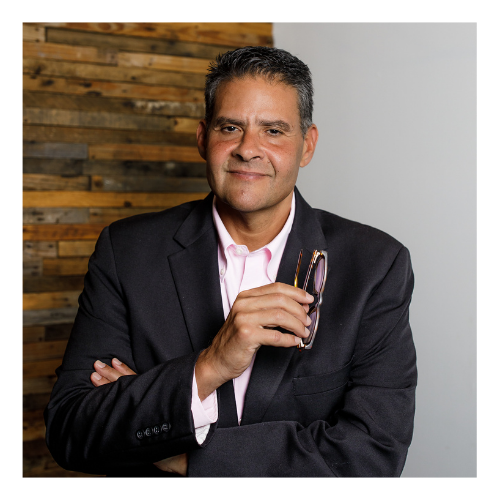
When I started my Wall Street career before most guys finish college…
It’s not because I had an “in” with an uncle or any family.
I didn’t come from money.
No trust fund, no connections, no Ivy League pedigree, no rich uncle.
I built my career the hard way, from outworking everyone else..
I learned to see the story behind the numbers that the “smart money” kept missing.
Grinding day-in and day-out, I earned a name for myself in high finance becoming one of the youngest broker-dealers in Wall Street history.
Then, 2008…
While most guys in my position got wiped out, I went to Washington.
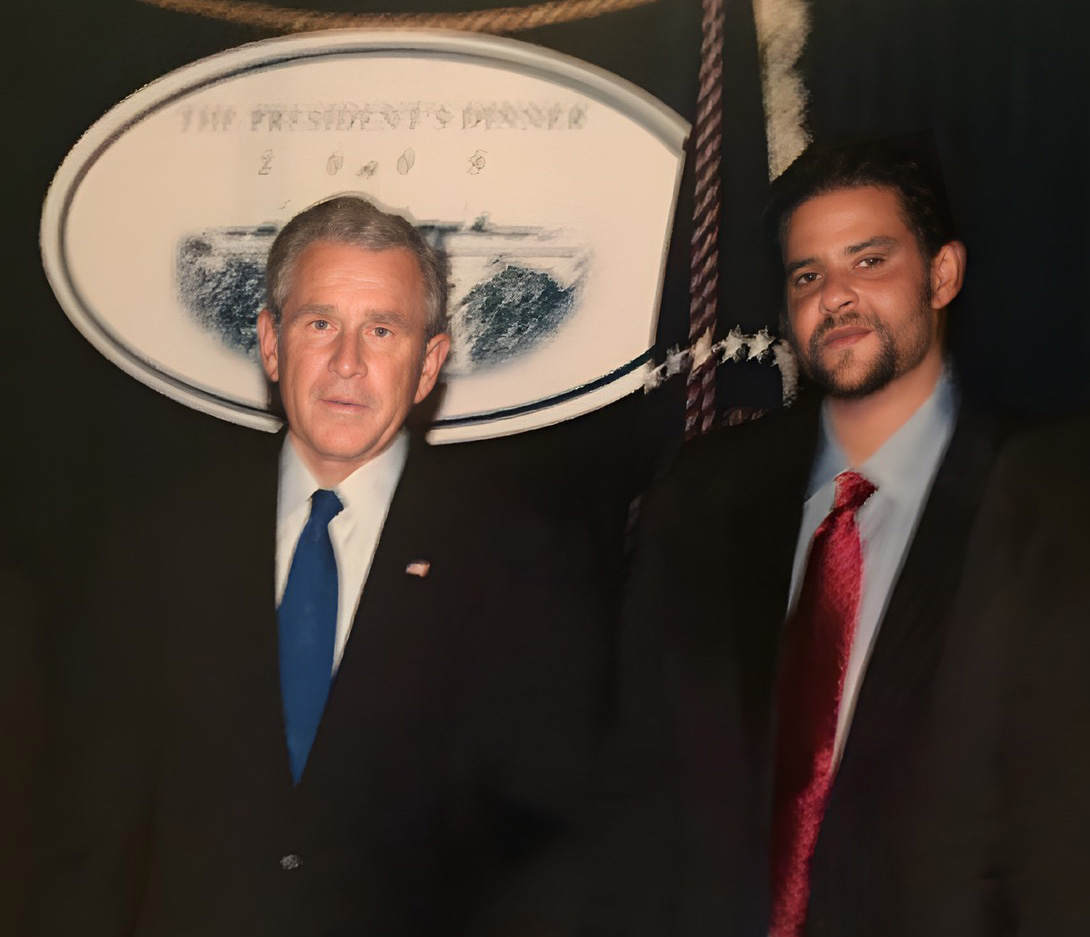
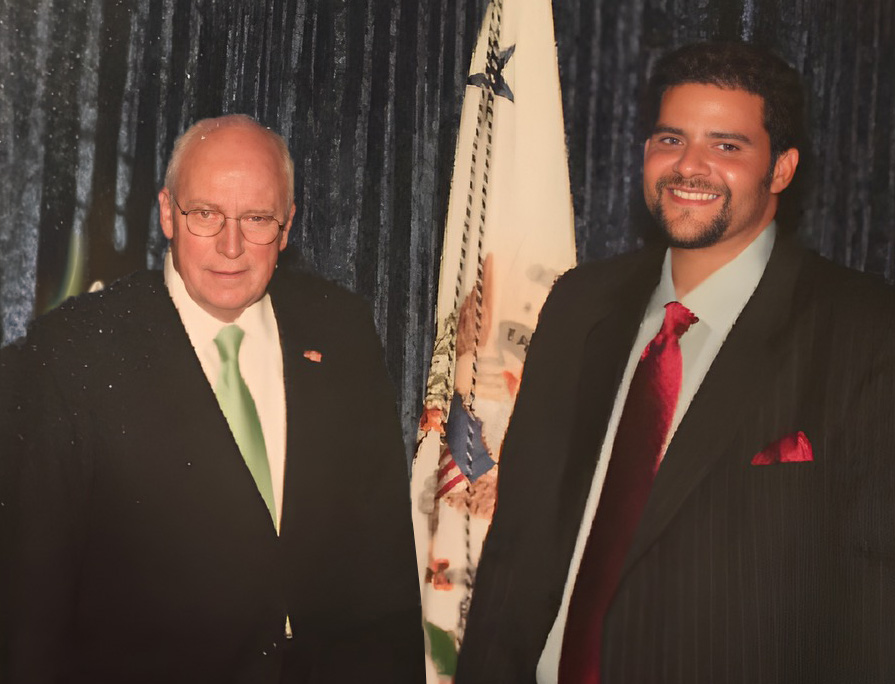
I met with President Bush and Vice President Cheney after having called the housing market a house of cards, and publicly announcing the whole rotten structure was about to collapse.
And while I was labeled a pessimist and a “crank,” I knew in my bones I was right.
I was certain about it.
And it’s the same certainty I feel now about what’s happening with the “second layer” AI company I’m telling you about today.
After I called the housing market a house of cards, $17 trillion in American household wealth simply… vanished.
But seeing what’s about to fall is only half of what I’ve done for 35 years.
The other half is seeing what’s about to rise — finding the company a story needs before Wall Street knows the story exists.
After the dust settled in 2009, I went on CNBC announcing that the stock market now was like going into a car dealership and seeing your favorite ride marked half off. How do you not buy now?
When the financial crisis had American Express trading like a damaged bank, I saw one of the great franchises in history on sale.
And rode it as much as 646% over four years.
It wasn’t alone: 700% on Starbucks.
459% on AutoNation.
235% on FactSet Research.
I saw the same signal before the COVID crash.
And again before the rebound that minted fortunes for the few who were positioned for it.
Because when the world locked down and everyone panicked, I asked one simple question: what will people actually do, stuck at home?
Then I recommended Scotts Miracle-Gro. It ran roughly 250%.
That same playbook handed my readers 102% on PagSeguro in twelve months.
186% on Floor & Decor.
101% on Magnolia Oil & Gas in a single year.
And 124% on DraftKings in just eight months.
But that’s just the tip of the iceberg.
More recently, I recommended Advanced Micro Devices years before the crowd understood what AI would do for chipmakers: up more than 226%, with profits already banked once on the way up.
ASML — a company I’ll tell you more about before this letter is over — has more than doubled since I added it.
Jabil, the quiet American manufacturer nobody talks about at dinner parties: up roughly 60%.
Rio Tinto: up about 72%, paying us fat dividends the whole way.
Years before this AI-driven rearmament wave hit the front pages, I was positioning readers across American defense. Lockheed. RTX. Kratos. AeroVironment. Exactly the world we now live in.
And three of the defining defense-tech stocks of this era?
My readers were in early on all three.
Palantir — which went on to surge as much as 2,700%.
Rocket Lab — a run of as much as 2,740%.
And Axon — up as much as 1,600% since I recommended it.
We didn’t sell at the exact tops — but my readers have been very happy with those rides.
Am I right every time? No.
Nobody is, and anyone who tells you otherwise is selling you a fantasy, not research.
I’ve had losers, and I’ll have them again. I’ll never pretend otherwise.
All told, we’ve averaged a win rate of 72% and an average return of 41.4%.

I’m not telling you this to brag.
I’m telling you because of what those moments have in common — and what they’re worth.
Because here’s what 35 years has taught me.
When the ground shifts under an entire economy, the fortune doesn’t go to the people who own the famous names.
It goes to the people who found the overlooked company the new world couldn’t live without — before the crowd knew it existed.
I’ve watched it happen in every transformation of my lifetime. Biotech. The financial-crisis recovery. The pandemic economy. And now the AI buildout.
The crowd stares at the famous names on the surface. The real money is made one layer down — in the companies the story needs. Found early. Held with conviction.
The last three times this exact setup appeared, it minted gains of 1,800%… 2,500%… even 3,300%.
Enough to turn every $10,000 into as much as $341,000.
I’ll show you all three — names, dates, and numbers — in the pages ahead.
And I believe the window opening right now is bigger than any of them.
This is one of those moments.
And the window has a date on it: October 2026 — at the latest.
So let me take you back to where this story cracked open for me.
Brace yourself, because this may sound stranger than fiction.
It starts with a file that hit the internet at 4:23 in the morning.
And a phone call that came three days after the bombs started falling in Iran.
Let me start with the file.
On the morning of March 31st, 2026, at 4:23 a.m. Eastern, a routine software update went out from this company.
The kind of thing that happens a hundred times a day in Silicon Valley and never makes the news.
Except this time, tucked inside that update was a single file that was never meant to leave the building.
By the time most of Wall Street had finished its first cup of coffee, it was over.
The complete blueprint of this company’s most important product — more than half a million lines of it — was sitting on the open internet.
Anyone on Earth could download it.
A young researcher spotted it first and posted a link.
Within two hours, a single mirrored copy had been bookmarked by more than 50,000 people.
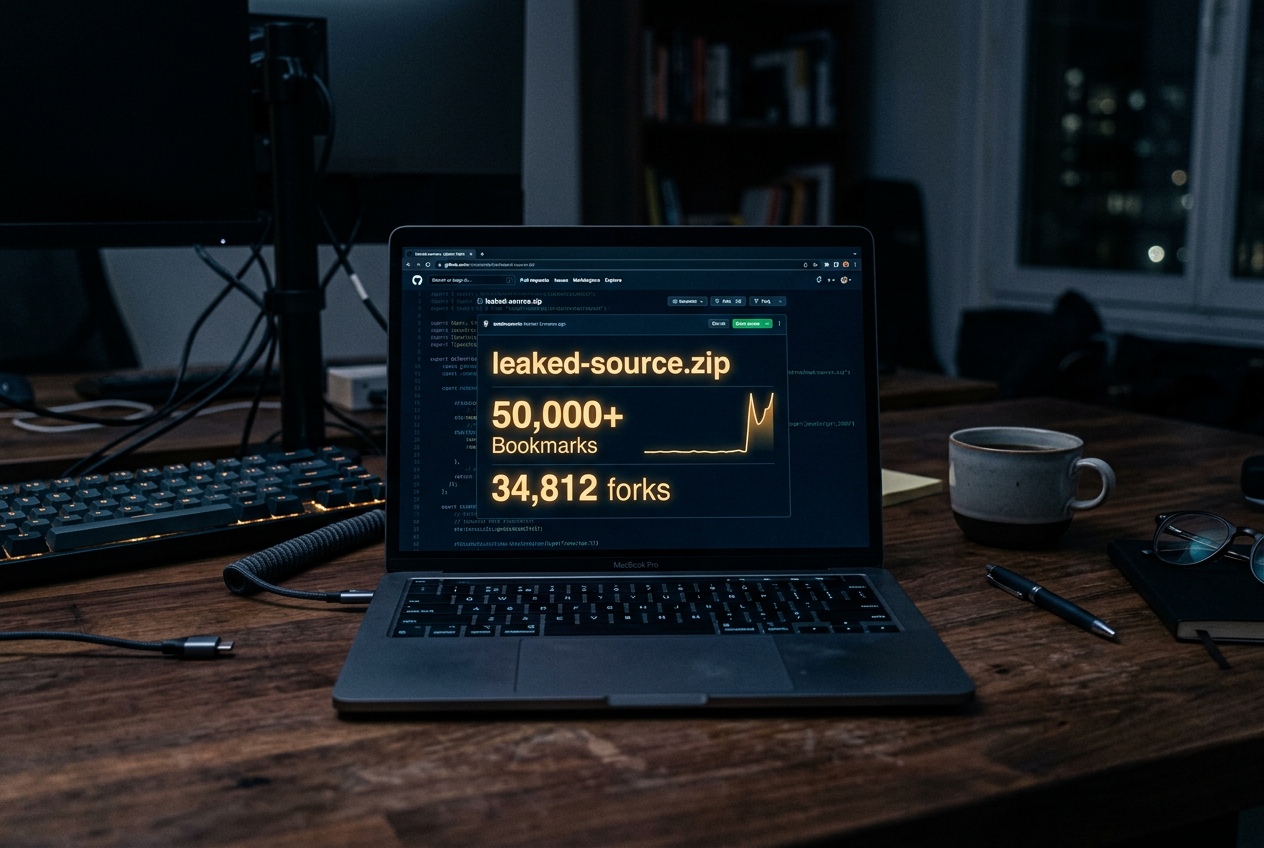
It became one of the fastest-spreading pieces of code in the history of the internet.
The company scrambled. Lawyers fired off takedown notices.
Too late.
The world had already seen inside the machine.
Here’s the strange part.
Almost every headline treated it as an embarrassing accident.
A careless slip by the company that’s supposed to be the most security-obsessed in the industry.
I didn’t see an accident.
I saw a confession.
Because researchers picking through those half-million lines found 44 hidden switches — features the public has never been shown.
And one codename kept appearing right beside them.
It sat next to a tool the company built to keep its own secrets from leaking out.
A reference to something it has never shown the public.
A creation so powerful the company has refused to release it to regular users at all.
Instead, it handed it to a small, guarded circle.
That circle now includes Apple, Microsoft, NVIDIA… and NATO.
I’ll tell you exactly what that is.
And why it changes everything — in a few minutes.
But that file isn’t what convinced me to write you today.
What convinced me happened a few weeks before the leak — three days after the bombs started falling in Iran.
My phone rang.
A man was visiting from Capitol Hill.
In town for only a few hours.
And he wanted to see me.
I got one hour’s notice.
I didn’t even have time to change.
In the photo from that meeting, I’m sitting across from a United States Congressman, wearing a black t-shirt.
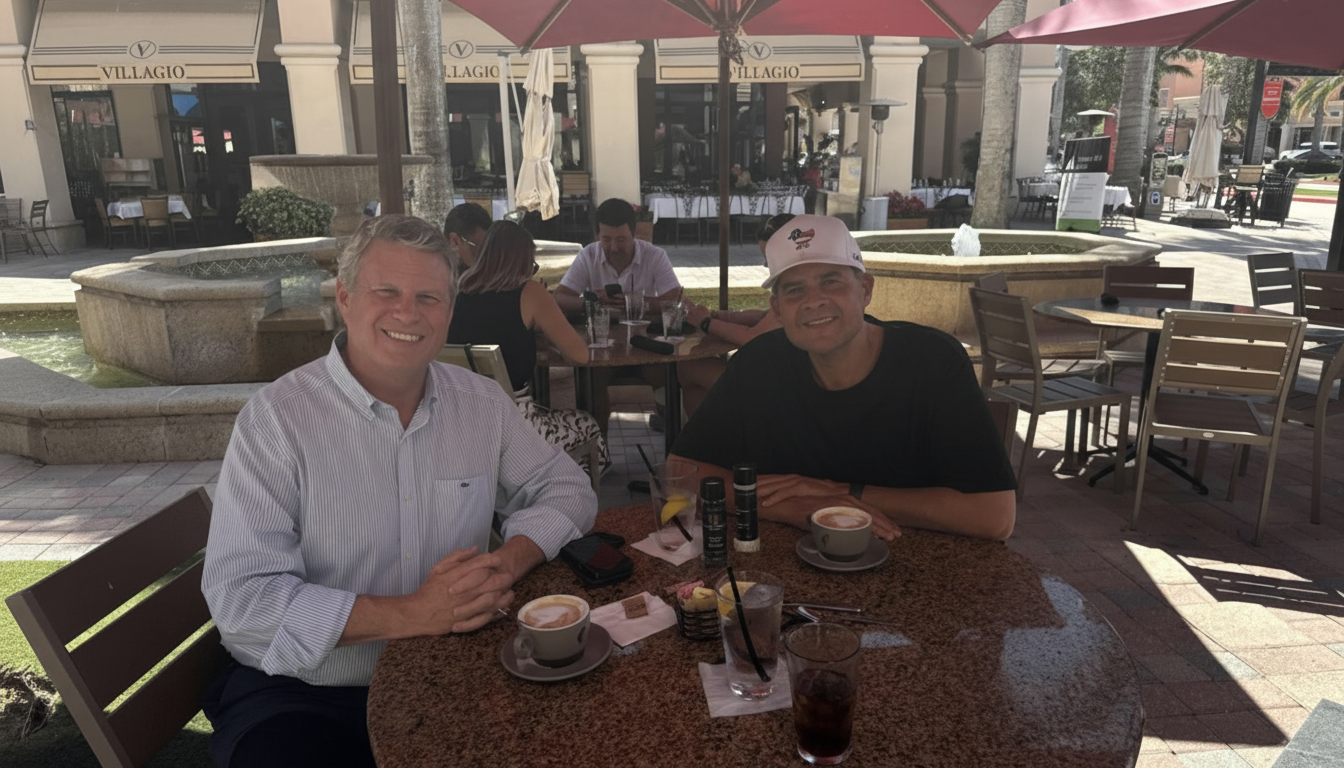
That Congressman was Bill Huizenga.
He’s the Vice-Chairman of the House Financial Services Committee — the committee that oversees the Federal Reserve, the Treasury, and the SEC.
And he sits on the House Foreign Affairs Committee.
That committee holds jurisdiction over the deployment of United States Armed Forces… and over what Washington calls “dual-use technology.”
Technology that can power an economy — or fight a war.
One man. Two committees. One controls the financial weapons. The other controls the military ones.
Now hold the timeline in your head.
On February 27th, the President banned the most powerful AI company in America.
On February 28th, American bombs started falling on Iran.
Three days later, I’m sitting across the table from the man who lives at the exact crossroads of money, war, and technology.
I didn’t arrange that meeting. It found me.
You see, thirty-five years in this business has bought me one thing money can’t: a seat at tables regular investors never see.
I’ve shaken hands with two sitting Presidents.
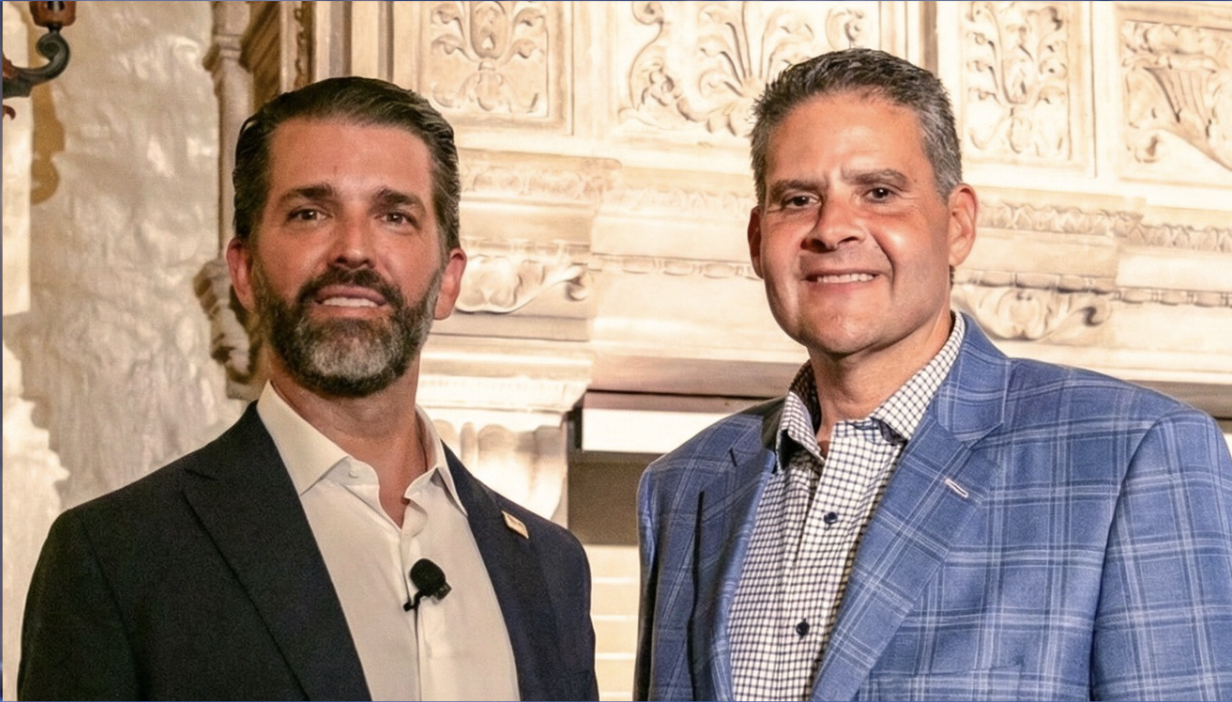
Last fall I sat for hours at a private dinner near Mar-a-Lago.
At the table: a small group of Wall Street heavyweights and the son of the President of the United States.
I won’t repeat exactly what we discussed.
But I’ll tell you what I walked away understanding — something Wall Street still hasn’t pieced together:
The fight in Washington over this company was never really about one software contract.
It’s about who controls the single most powerful technology ever built.
And the people closest to that fight are not panicking.
They are not selling.
They are quietly positioning.
So when that file hit the internet a few weeks later, I already knew exactly what I was looking at.
While the rest of the financial press laughed at the “blunder,” I spent the next several weeks doing what I’ve done for thirty years when the ground is about to move:
I started digging.
And what I found is the single largest transfer of wealth in American history.
Trillions of dollars are draining out of the old economy.
They’re flooding into a handful of companies… and today I’m going to show you how to place yourself right next to them.
This is the kind of shift that built those 1,800%… 2,500%… 3,300% fortunes I mentioned — except this time, you can see it coming.
So let me show you what this company actually built.
Then I’ll show you the door.
Start with what it is not.
It is not another chatbot.
Not a smarter search box, not a clever toy for writing emails.
For three years, that’s all most people thought “AI” was — something that talks.
This is something that works.
Tell it what you want done, and it does it.
It writes the software. It builds the system.
It performs the job — start to finish — that used to take a room full of skilled professionals weeks or months to finish.
That leaked file I told you about?
It was the blueprint for the tool that started all of this.
A tool that can sit down at a computer, open the programs, and do the work of an entire department.
No human touches the keyboard.
I know how that sounds.
So before sitting down to put this presentation together, I did something I’d encourage you to remember as you read everything that follows:
I tested it myself.
Understand — I’m not a programmer.
I couldn’t write a line of computer code if you held a gun to my head.
I opened this company’s tool.
I typed one sentence in plain English.
I asked it to take my sprawling research folder on this very story — filings, court documents, news clippings, my own notes.
And turn it into an organized, cross-referenced briefing book.
Then I went and poured a cup of coffee.
By the time I sat back down, it was finished.
Work I would have handed a junior analyst and expected back in a week — done before the coffee cooled.
Done well.
And I’m not special.
The Washington Post ran the same experiment with regular readers.
One typed for twenty seconds describing an app he wished existed.
Minutes later, the system handed him a working website.
When it didn’t display right on his phone, he typed “make it work on mobile” — and it fixed itself.
Here’s the one that should really stop you.
This company held a public contest for people building with its tools.
Three of the five winners weren’t software engineers at all.
A cardiologist. A road-systems worker. And the grand-prize winner?
A personal-injury attorney — who out-built hundreds of professional programmers.


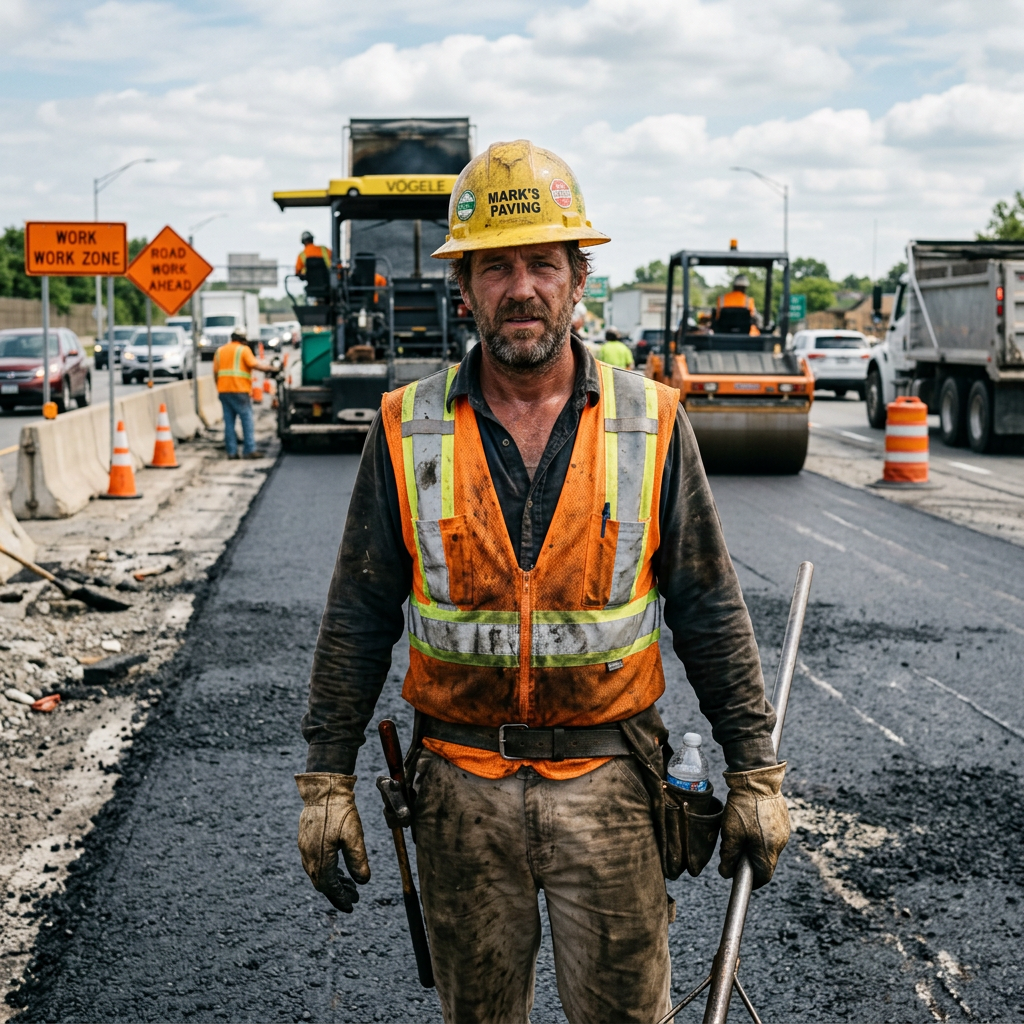
The barrier between “having an idea” and “having working software” — a barrier that supported millions of careers — is simply gone.
And the day Wall Street finally understood what that meant… the floor gave out.
It began quietly.
In January, the company released a version of its tool that could operate a computer the way a person does.
The market shrugged.
Then, one by one, it began knocking over the pillars of corporate America — almost casually.
One morning, it published a single, unremarkable blog post about modernizing the ancient computer code that still runs the world’s banks, ATMs, and the IRS.
That blog post erased $31 billion from IBM in one trading day.
It was the worst day the company had suffered since the dot-com crash of 2000.
Days later it turned toward the legal world.
The company that owns the database nearly every law firm in America pays to use fell 18% in a session.
Its worst drop on record.
Then cybersecurity. Then consulting. Then advertising.
In six weeks, the index that tracks America’s largest software companies — Microsoft, Oracle, Salesforce — lost a quarter of its entire value.
The press gave it a name: the SaaSpocalypse.
By the time the dust settled, the toll was staggering.
$285 billion gone in a matter of days.
Microsoft alone — the second most valuable company on the planet — surrendered $700 billion.
All told, this single company has vaporized trillions of dollars from the old software economy in the span of one year.
And here is what should keep you up at night:
This is not the disaster.
This is the warm-up.
And remember: somewhere in Washington right now, an SEC examiner is reading the paperwork.
The paperwork that starts the clock on everything I’m about to show you.
The paperwork that turns this company from a forbidden speculation… into a windfall that could hand prepared investors 1,800%... 2,500%... even 3,300% as this story plays out.
Don’t take my word for any of it.
Take the word of the man building the machine.
The CEO of this company knows what it can do better than anyone alive.
And he has gone on the record — in a remarkable interview with Axios — with a warning so blunt that most of his peers refuse to repeat it out loud:
This technology, he says, could eliminate half of all entry-level white-collar jobs in America within five years.
And push unemployment as high as 20%.
His reasoning, in his own words: the people building this technology have “a duty to be honest” about what’s coming.
Because most Americans, he says, are simply unaware.
Tech. Finance. Law. Accounting. Consulting.
The safe, solid, college-degree careers that built the American middle class.
The man who built the bomb is telling you to take cover.
And it is getting faster, not slower.
This company builds in days what used to take its rivals years.
Because the machine now writes its own code.
Its own lead engineer has admitted that his recent work was written, start to finish, by the AI itself.
That leaked file proved it.
Here’s how fast.
This company needed an entire new product for everyday office workers — not programmers.
It didn’t assign an army of engineers.
It told its own AI to build it.
The product shipped ten days later.
A new product. A new casualty. Every couple of weeks.
And maybe you think this is still theory.
Some prediction about a distant future.
What I’m about to show you is terrifying to the average American.
It should be.
But you are not going to be the average American. Because if you position yourself in the companies I’m going to show you today —
The free stock I want to give you AND the secret second layer company…
You have the chance to insulate your wealth from the destruction that’s about to ripple across the workforce.
Hold onto that picture — your money standing on the winning side — through everything you’re about to read.
So let me show you what’s already happened to American payrolls while the press argued about chatbots:
Amazon cut 14,000 corporate jobs last October.
Then, on January 28th, it cut 16,000 more — roughly 10% of its entire corporate workforce, the largest job cuts in the company’s thirty-year existence.
Salesforce — one of the most successful software companies ever built — slashed its customer support team from 9,000 people to 5,000.
Its CEO didn’t even dress it up.
His exact words: “I need less heads.”
Block eliminated nearly 40% of its workforce.
Microsoft showed nearly 9,000 American employees the door in a single “voluntary retirement” sweep.
And here’s the one I can’t get out of my mind.
Intuit — the maker of TurboTax — announced it was cutting 3,000 jobs.
A full 17% of its people.
And in the same breath, it signed multi-year AI deals with this very company.
AI was cited in more than 54,000 job cuts last year.
That’s according to Challenger, Gray & Christmas — the firm that has tracked American layoffs for over four decades.
And this year makes that look quaint.
By one running industry tally, more than half of all corporate layoff announcements now name AI or automation as a driver.
Over 150,000 workers across 135 companies in the first half of 2026.
So hold on to the carnage you just read about.
The trillions erased. The jobs on the chopping block.
The worst trading days in a generation.
That was only the opening act.
Now look at your own portfolio.
Your 401(k). Your IRA.
The “safe” index funds you were told to hold for the long run.
There is an excellent chance you are standing directly in the blast radius of this thing right now.
You may be holding the very companies it was built to destroy.
And you have no idea.
But here is what almost no one understands, and what I have become dead certain of:
The same force ripping the value out of the losers is about to create one of the largest fortunes in modern history.
But only for the few who own the right side of it.
The kind of shake-up that has already minted 1,800%, 2,500%, even 3,300% gains for investors who found the right overlooked company.
I’ll show you all three — names, dates, numbers.
And then I’ll show you the next one… starting with a free ticker you can snatch up today…
Plus, details on what I now believe is one of the greatest AI investments of the decade…
We’ll come back to this shortly.
So it’s time I told you who this company actually is.
Because the answer is going to surprise you.
You know this company. You’ve read about it. You may have even used it.
And in a moment, I’ll show you why the United States government tried to erase it… while secretly harnessing its technology.
Then I’ll show you the single, freely traded “backdoor” that lets a regular American own a piece of it…
And I’ll show you why you have to make your move before October.
By now you may have guessed it.
This is the company whose technology quietly runs inside Amazon, Microsoft, and Nvidia. Among countless others.
The most powerful corporations in history.
Every one of them has poured billions into it.
The company that, four years ago, didn’t exist.
I’m talking about Anthropic.

You may know it as the maker of Claude — the AI assistant millions of people now use every day.
But calling Anthropic a “chatbot company” is like calling Amazon a bookstore.
Look at what’s actually happened.
In late 2024, Anthropic was pulling in about $1 billion a year.
By the end of 2025, that figure had reached $9 billion.
By spring 2026, it crossed $47 billion.
That pace of growth is so rapid that veteran investors call it the steepest they have ever seen in their careers.
Its price tag tells the same story, only louder.
Three years ago: $5 billion. Last September: $183 billion. This February: $380 billion.
And just weeks ago, in what may be its final private fundraise, Anthropic was valued at $965 billion.
Nearly one trillion dollars — passing its famous rival OpenAI to become the single most valuable pure AI company on Earth.
Early investors – the folks who got access to those private funding rounds – are already sitting on returns of 23,000%.
Now, maybe a voice in the back of your head is whispering “I’ve seen this movie before — 1999, the dot-com bubble, a trillion dollars of hype.”
Good.
That voice has probably saved you money.
I traded through that bubble from my office on Wall Street, and I watched it blow up people’s accounts.
So let me show you the difference in one sentence.
The dot-coms were valued on eyeballs — Pets.com never figured out how to make a dollar.
This company collects $47 billion a year in real revenue.
From real contracts.
Signed by the savviest buyers on Earth — Fortune 500 companies, banks, militaries.
And that figure has been roughly tripling every year.
In 1999, the valuations were a bet that revenue might someday show up.
Here, the revenue showed up first — at the steepest growth rate veteran investors say they’ve ever witnessed.
And remember that reference I found buried in the leaked code — the creation so powerful the company has never shown it to the public?
It has a name. Internally, they call it Mythos.
By Anthropic’s own account, it is the most powerful AI model the company has ever built.
And here is something I never thought I’d see happen in my 30 years of business:
This company built the most valuable product in its history…
The most powerful AI model on Earth.
And decided you’re not allowed to buy it.
Not at any price. Not on any waiting list.
Why?
Because by Anthropic’s own assessment, Mythos is too dangerous to hand to the general public.
A system this capable doesn’t just write software — it can find the cracks in software.
The flaws buried in the systems that run banks.
Power grids. Pipelines. The plumbing of modern civilization.
So what can it actually do? Anthropic showed the world a sample.
In just its first weeks, working with about fifty partners, Mythos found more than ten thousand serious security holes in the most important software on Earth — the code running banks, hospitals, and power grids.
It uncovered flaws no human had ever found, in every major operating system and every major web browser.
The kind of secret doors a hostile government could slip through.
In one test, it chained four separate bugs together into a single attack that walked straight past defenses built to be uncrackable — something security researchers say they had never seen an AI do.
And this isn’t theoretical.
At one partner bank, Mythos caught a criminal in the act — stopping a fraudulent $1.5 million wire transfer after a thief had hijacked a customer’s email and made spoof phone calls to drain the account.

Here’s the line that tells you everything:
Anthropic admitted that finding the holes is not the hard part anymore.
The machine finds them faster than an army of humans can patch them.
That is a capability no other company on Earth has proven it can match.
In the wrong hands, that’s not a product.
That’s a weapon.
If you doubt how seriously the world took that, look at what the market did the day Mythos was announced.
CrowdStrike — one of the most important cybersecurity companies in America — fell 8% in a single session.
Investors did the math instantly: if this thing exists, the entire security industry just changed.
So what did Anthropic do with the most powerful AI ever built?
It locked it inside something called Project Glasswing.
A guarded alliance with one mission: defend the world’s critical infrastructure before someone else builds the same weapon without a conscience.
Look at the roll call of who’s inside that circle:
Apple.
Microsoft. Google. NVIDIA. JPMorgan.
The biggest banks and the biggest technology companies on Earth, standing behind one company’s shield.
And then it gets bigger than business.
Because NATO joined.
So did the cyber-defense agency of the European Union.
Stop and absorb the irony of that.
At the very moment Washington was branding this company a threat to national security… the Western military alliance was signing up for its protection.
Now — I promised you at the start that I’d tell you why this changes everything.
Here it is, and this is the part Wall Street hasn’t priced:
Think about everything you’ve heard about Anthropic’s growth.
The $47 billion in revenue.
The steepest curve veteran investors have ever seen.
All of it comes from the products they actually sell.
Mythos isn’t one of them.
The single most powerful thing this company has ever created is sitting in the warehouse.
Kept off the shelf on purpose.
It generates who-knows-what through a private alliance whose contracts no outside analyst has ever seen.
Think about what happens when this company files to go public.
For the first time, the S-1 has to show the world what’s really inside.
Every IPO in history has been valued on what a company sells.
This may be the first one where the biggest question is what the company has refused to sell — so far.
That’s not a chatbot company.
That’s an arsenal with a ticker symbol coming.
And when an arsenal like this goes public, its suppliers get rich overnight.
One company’s shareholders got $247 billion richer in a single trading day — when this firm’s chief rival signed just one contract.
I’ll show you that story — and the company positioned for the sequel — in a few minutes.
Not only am I going to give you a free backdoor ticker… but I’ll be giving you details on a second, even deeper layered company… one I believe will unleash the biggest gains of this entire story.
The last three times a situation like this appeared, it minted gains of 1,800%… 2,500%… even 3,300%.
Which brings me to the question in the headline…
Here is the part the financial press has almost entirely ignored.
And the part that, once you see it, makes everything else click into place.
Anthropic was the first AI company in history to have its technology cleared for America’s classified military networks.
In fact, U.S. special forces captured a foreign dictator earlier this year and pulled him from his own palace to face trial.
Anthropic’s technology was reportedly used in the operation.
That detail was first reported by the Wall Street Journal.
And that is exactly where the trouble started.
The Pentagon wanted more. It wanted unrestricted access.
The right to use this technology however it pleased.
That included the mass surveillance of American citizens — and autonomous weapons that could kill without a human in the loop.
Anthropic refused.
The company drew a hard line.
Its technology would not be turned against American citizens.
And it would not pull a trigger without a human hand on it.
Washington’s response was swift and brutal.
The President ordered every federal agency to stop using Anthropic.
At once.
The Secretary of Defense branded the company a “supply chain risk” to national security.
Overnight, one of the most important companies in America was treated like a hostile foreign power.
So Anthropic did something almost no company dares to do.
It sued the federal government — and a federal judge sided with the company, citing, in the ruling itself, “First Amendment retaliation.”
Sit with that phrase.
A federal court found that the government of the United States was punishing an American company for refusing to compromise its principles.
And here is the detail that tells you everything:
Even after branding Anthropic a threat… even in the middle of a shooting war with Iran… the Pentagon quietly kept using its technology anyway.
Don’t take my word for it.
In March, under questioning from the ranking member of the Senate Armed Services Committee, the Pentagon’s own Chief Information Officer admitted it on the record: “The use of the system is active right now.”
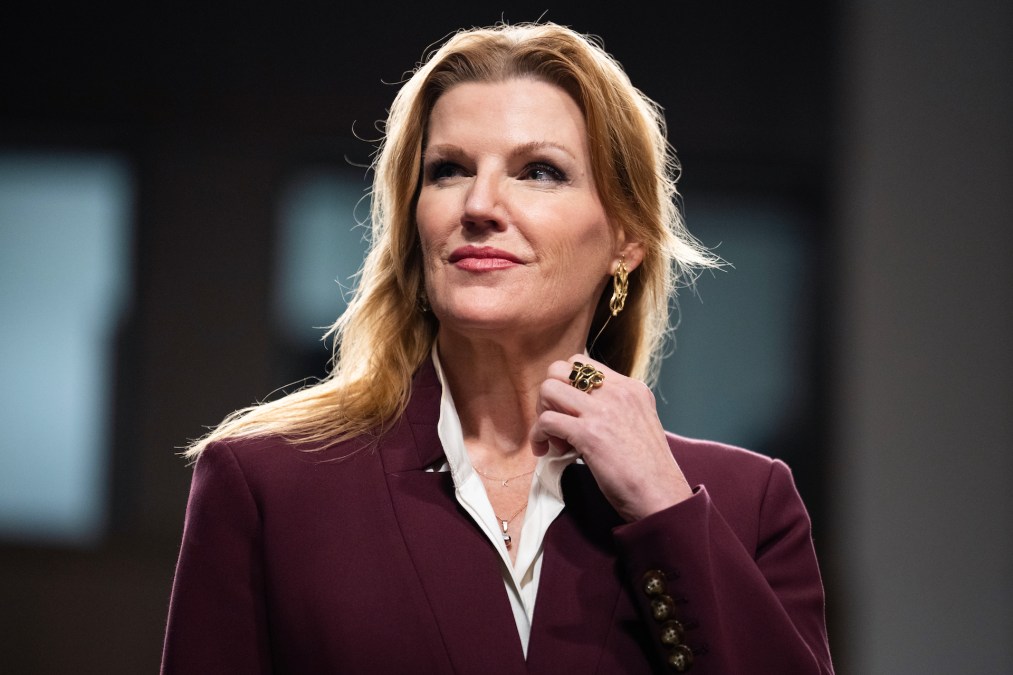
Active. In a live war.
Because here’s what the headlines never explained.
This company’s technology was the only AI running on the military’s classified networks.
It ran inside the national nuclear laboratories.
Defense insiders admitted that truly removing it could take a year or more — twice as long as the Pentagon claimed in public.
Even Boeing and Lockheed Martin were ordered to report how deeply they depend on it.
So ask yourself a hard question.
In the middle of a war — with American pilots in the air — why would the most powerful military on Earth defy its own Commander-in-Chief to keep one company’s software running?
You don’t do that for a convenience.
You do that for something your missions cannot run without.
Because, again — nothing else comes close.
And here’s the part almost nobody noticed.
In February, Elon Musk called this company “evil.”
Three months later, he took $4 billion of its money — to keep its machines running.
SpaceX’s data centers now power the very company he swore was his enemy.
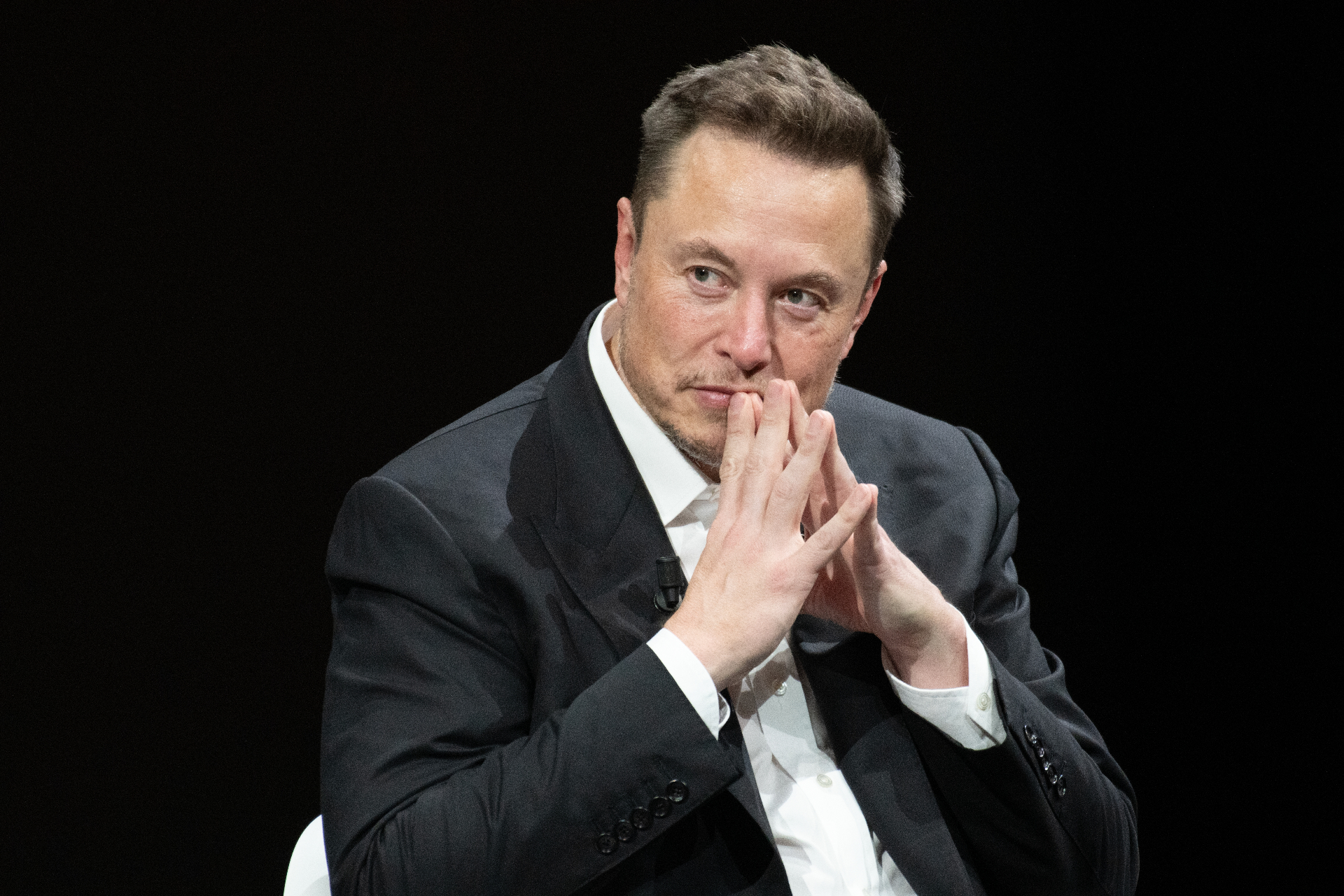
The richest man on Earth looked at this war… and decided the winning position wasn’t fighting this company.
It was getting paid by it.
So let me put the whole picture in front of you at once: A company growing faster than any in modern history…
The most valuable AI on the planet…
So powerful the military won’t stop using it even when ordered to…
So valuable Elon Musk gave up “beating” it and “joined” it instead…
So principled it went to war with the President of the United States — and won.
And in a matter of months, it’s going to do the one thing that turns all of this into the opportunity of the decade.
And the paperwork for that is already filed.
The fuse is already lit.
I’ve just told you a story that sounds almost too big to be true.
A trillion-dollar company you’ve been forbidden to touch.
A secret weapon. A war with the White House.
And if some part of you is thinking “nothing like this has ever happened before”… you’re almost right.
Almost.
Because something like it did happen. Once.
And it minted one of the greatest fortunes in stock-market history.
The year was 1919.
The technology was radio.
If that sounds quaint, understand: as one market historian put it, radio was “the internet and AI of its day.”
During World War One, radio was so vital to the war effort that the government BANNED it.
Every civilian radio station in America — shut down by federal order. The Navy seized the airwaves.
A world-changing technology, locked away by Washington in the name of national security.
Sound familiar?
When the war ended, Washington had a problem. The only company that could carry radio across the Atlantic was controlled by the British.
So the government engineered a solution. A young Navy official named Franklin Delano Roosevelt pushed General Electric to buy out the foreign owners — and create a new, American-controlled radio champion.
They called it the Radio Corporation of America. RCA.
Born from a ban. Built for national security. Blessed by Washington.
Then it hit the public market. And what happened next still echoes a century later.
RCA ran from under $6 a share in 1921 to a split-adjusted peak above $570 by 1929.
A gain of roughly 9,700%.
Enough to turn every $10,000 into nearly $1 million.
While radio sales exploded fourteen-fold in seven years — the 1920s version of the revenue curve I showed you earlier.
The regular Americans who recognized the pattern — forbidden technology, national-security blessing, a public listing — didn’t need to be insiders.
They just needed to be early.
One honest note: radio’s mania eventually overshot, and the 1929 crash punished those who arrived late and stayed too long. Which is exactly why the entry — before the crowd arrives, not after the euphoria — is everything. And why I’ll also hand you a sell list before we’re done.
A century later, the same pattern is back.
A technology the government banned. A company born under Washington’s shadow — fought over, funded, and feared by the same national-security machine. And a public listing with a date on it.
An investment hoarded by Wall Street for itself…
And a secret, legal loophole that gets you in.
So when I tell you the largest IPO in stock-market history is months away — and that the one legal door for regular investors is standing wide open — understand this:
I’m not guessing.
I’m doing the exact same thing I did with Editas, with Loxo, with AMD.
I’m handing you the story before the crowd finds it.
And this time, the story comes with a date.
On June 1st of this year, Anthropic quietly filed the confidential paperwork to go public.
The target: a debut as soon as October.
The size could make it one of the largest IPOs ever to hit the stock market.
For two years, Wall Street’s biggest players have been waiting for this moment.
The early investors who got in are sitting on the kind of gains that rewrite a family’s future.
And you?
You’ve been locked out. Completely.
You can’t buy Anthropic on any exchange, because it’s still private.
Federal law won’t let you into a private company like it unless you’re already a millionaire.
And then this May, Anthropic slammed the final door shut.
It voided the “backdoor” funds and contracts that thousands of regular investors had piled into.
The headlines wrote themselves:
Worthless. Their word, not mine.
The paper those investors held plunged almost 40% in a single week.
And Anthropic’s own warning page made it permanent: any sale or transfer of its stock without board approval “is void and will not be recognized on our books and records.”
Now, maybe you’re thinking what most people are thinking right now:
“Fine, Dylan. I’ll just wait until October and buy it on IPO day, like everybody else.”
I need you to hear this next part, because it may be the single most expensive belief in all of investing:
By the time you’re finally allowed to buy a stock like this, the fortune has already been made.
Look at the numbers I showed you.
Three years ago, Anthropic was valued at $5 billion.
Today: $965 billion.
That’s nearly a 193-fold rise — and every dollar of it happened in private.
Behind the velvet rope.
While you and I were legally barred from the room.
The IPO isn’t your invitation to that party.
The IPO is the party ending — it’s the moment the insiders who bought at $5 billion finally get to sell.
And who do you suppose they’re selling to?
The eager public lined up on day one.
You don’t have to take my word for it.
Just remember how this movie has played out, over and over, with the most hyped IPOs of the last decade:
Uber went public at $45 a share amid wall-to-wall coverage.
Within a year, early buyers were sitting on losses of roughly 40%.
Lyft priced at $72.
Within two years it traded under $20.
Robinhood — the company that was supposed to democratize investing — went public at $38.
Within months, it had lost roughly three-quarters of its value.
Even Facebook, one of the great businesses of our era, cut its first-day buyers roughly in half before it ever made them a dime.
The pattern isn’t bad luck. It’s arithmetic.
Academic researchers have tracked thousands of IPOs across decades.
They’ve documented the same brutal truth: the average IPO lags the market for years after its debut.
So no — I am not telling you to line up and buy Anthropic on IPO morning.
I’d sooner tell you to skip it entirely.
What I’m telling you is something completely different:
The way to win an IPO is to be positioned before it happens.
You do it through the companies whose hidden stakes get repriced the moment the filing becomes public.
And understand the timing, because this is where the real deadline lives.
The repricing I’m going to show you doesn’t wait for October.
Anthropic filed confidentially on June 1st.
The SEC review is running right now.
Nobody outside the SEC knows the day those numbers surface. The only date on the calendar is the deadline they’re racing toward: an IPO as soon as October.
Which is why the locked doors matter so much.
And why the fourth one matters most of all.
Because, as I told you at the very start… there is a fourth door.
And whoever was supposed to lock it forgot.
Let me show you exactly where it is.
Before we get to the three steps, this first part is simply a gift.
It costs you nothing. It requires no membership. Consider it my proof — paid in advance.
Think back to that May door-slam — the day the “exposure funds” got voided, and thousands of investors learned overnight that the paper they owned wasn’t Anthropic at all. And here’s why it matters: while the fake backdoors were collapsing, the real one was sitting in plain sight the entire time.
Buried in court documents almost nobody bothered to read.
It surfaced during the government’s massive antitrust case against one of America’s biggest tech companies.
Lawyers pried open something this company had never put plainly in front of its shareholders:
It owns roughly 14% of Anthropic. Not a side bet. Not a contract. Not “exposure.”
Real, board-blessed equity — accumulated quietly, year after year, while the world was looking elsewhere.
It’s so big the two companies negotiated a hard cap: Google isn’t allowed to own more than 15%.
The company is Alphabet — Google. Ticker: GOOG.
There it is. No paywall, no gimmick. That’s the door.
And for the record — this isn’t a pick I grabbed this morning to dress up a sales letter.
In less than a year, my readers are up 74% on our GOOG position.
I’m not chasing a headline. I’ve been positioned.
What I’m about to show you is why I believe the biggest move is still in front of us — not behind.
Now, I can hear the objection already: “Google? Dylan, I came here for a secret, and you’re handing me one of the most famous companies on Earth?”
Stay with me.
Because what I’m about to show you is the part that is genuinely secret.
The part that stunned even me, after thirty years of reading balance sheets.
At today’s private valuation, Google’s 14% stake in Anthropic is worth roughly $135 billion.
That number alone would make it one of the most valuable corporate stakes in Silicon Valley history.
In fact, the financial press just spent a month telling you to buy this very stock… for its SpaceX stake.
A stake worth about $107 billion.
Almost none of them mention the other ticket it’s holding.
The one worth $135 billion. In the company Washington banned.
Compounding faster than anything Silicon Valley has ever produced.
Wall Street finally noticed the smaller of Google’s two golden tickets — and walked right past the bigger one.
But the real shock landed last quarter, in a single line of Alphabet’s earnings report that the financial press barely touched:
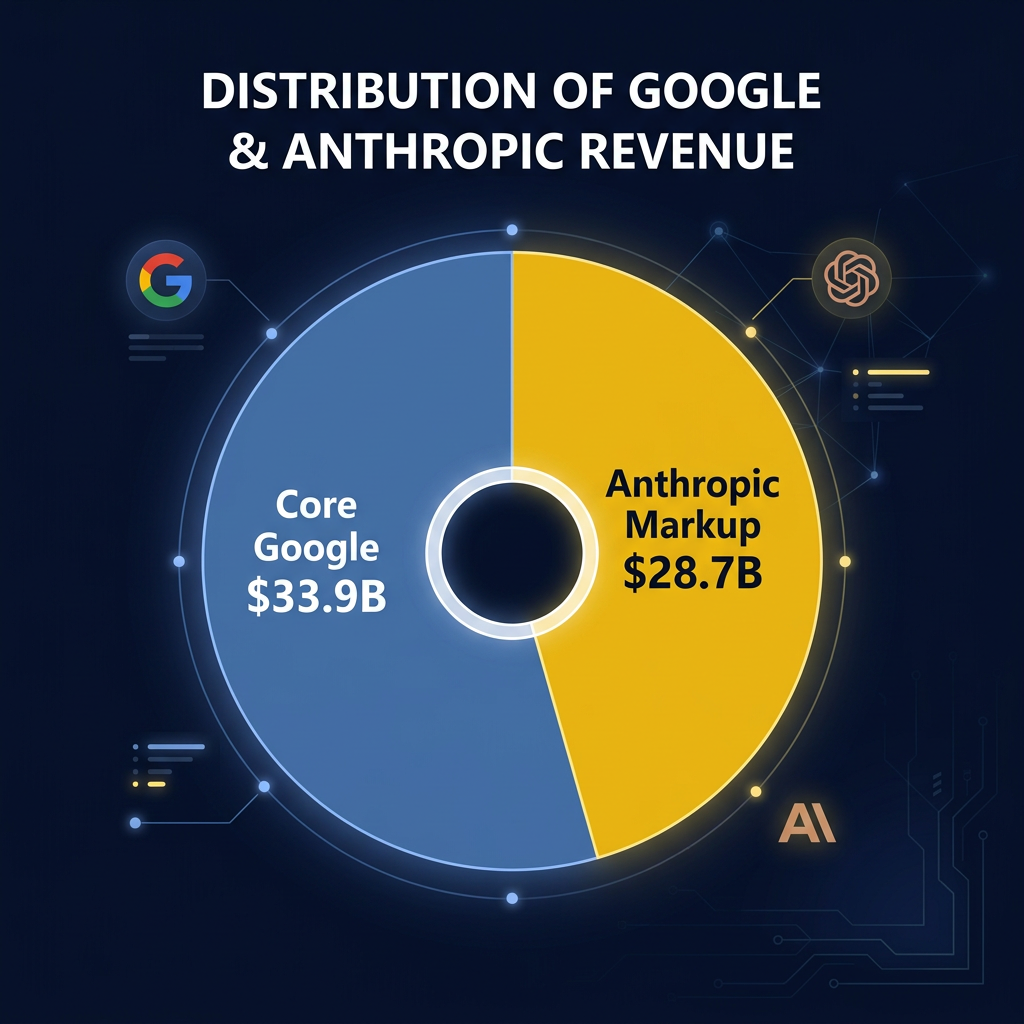
Alphabet posted the biggest quarterly profit of its existence — $62.6 billion.
Except nearly half of that profit — about $28.7 billion — didn’t come from Search.
Didn’t come from YouTube.
Didn’t come from Android, or Gmail, or the cloud, or a single product you’ve ever used.
It came from Google marking up the value of its hidden stake in Anthropic.
Let that sink in.
In its record-breaking quarter, one of the most scrutinized companies on the planet made almost as much money owning Anthropic as it made being Google.
There is, in effect, a $135 billion AI company living inside Alphabet’s balance sheet.
And Wall Street is still pricing the stock like it’s a search-and-ads business with a side project.
That’s the mispricing. That’s the open door.
And here’s the catalyst that drags it into the daylight:
The S-1 itself.
Because that filing doesn’t stay secret until IPO day in October.
By SEC rule, a confidential filing must flip public at least 15 days before the company starts pitching its shares to Wall Street.
No announcement. No countdown. One ordinary morning, it simply appears on the SEC’s website.
And once it does, the gap starts closing fast — well before the first share ever trades. Which is why the move happens now. Not in October.
For the first time in history, it will put a precise, public, SEC-stamped number on that stake.
No more burying it in court filings.
No more “other income” line items.
Every analyst, every index fund, every algorithm on Wall Street will be forced to look at the same number on the same day.
And they’ll all ask the same question:
Have we been valuing Alphabet correctly?
I believe the answer is no.
And I believe the repricing begins the moment those numbers surface — and completes by the time the IPO prices in October.
And if you’re sharp, you’re already asking the obvious question:
“Dylan, if the stake showed up in court documents, doesn’t Wall Street already know? Isn’t it priced in?”
Knowing and pricing are two different things.
Remember that record quarter? What did the analysts do with it? They stripped it out.
Go read the research notes: they call it “non-core.” “One-time.” “Paper gains.”
Wall Street’s models treat a $135 billion position in the most valuable AI company on Earth as a footnote.
That’s not pricing. That’s filing something away to think about later.
The S-1 is what turns the footnote into a headline.
And here’s the part that should make you sit up:
Nine months ago, Google’s slice of Anthropic was worth about $26 billion. Today: roughly $135 billion.
A five-fold jump — faster than almost any asset Alphabet has ever owned, including its own businesses.
And suppose Anthropic’s value merely doubles again in the years after going public.
That is exactly what the dominant AI franchises before it have done.
That single line item grows by another $135 billion or more.
So here’s the simplest honest way I can frame what you’re getting with this free pick:
At today’s price, you’re paying a fair multiple for the most profitable ad business in human history.
And you’re getting a $135 billion stake in the world’s most valuable AI company thrown in.
And Wall Street still calls it a footnote.
I believe things will change dramatically once the market prices that footnote in.
The clock on that filing started June 1st.
Now — two things before we go further, because I promised you the truth and not a fairy tale.
First: Google is not a moonshot.
It will not rise 1,000% by Christmas, and anyone who promises you that from a company this size is lying to you.
This is the position you can buy this afternoon and hold for a decade.
But it is not where the biggest gains from this story are going to come from.
Because here’s the truth about giants: Google might move 20%, 30%, even 50% as the world reprices that hidden stake.
Wonderful.
But you don’t make 10,000% returns owning the empire.
You make 10,000% returns by finding the single chokepoint the entire empire cannot live without — before the crowd knows it exists.
And here’s what thirty years of watching these manias has taught me — what history proves every single time:
When a giant goes public, the fortune doesn’t just flow to the giant.
It flows through it — down into the small, overlooked companies the giant cannot live without.
The suppliers. The bottlenecks. The picks and shovels.
Look at what happened with this company’s chief rival.
As OpenAI’s valuation exploded from $29 billion to over $850 billion, the biggest winners weren’t holding OpenAI shares — nobody outside the velvet rope could.
The fortune flowed into its suppliers.
Last September, OpenAI signed one single computing contract with Oracle.
Oracle’s stock surged 36% in one trading day — its biggest single-day gain since 1992.
It added roughly $247 billion in market value before the closing bell.
And it briefly made Larry Ellison the richest man on Earth.
One contract. One day. A quarter of a trillion dollars.
Then there’s CoreWeave.
An obscure company almost nobody had heard of, whose business is renting OpenAI raw computing power.
It more than quadrupled within months of going public.
That is what happens to the companies an AI giant cannot live without.
And there is one small American company — trading at a tiny fraction of Google’s size — that sits at the exact chokepoint.
The chokepoint this entire revolution has to pass through.
A company whose machines every AI chip on Earth must touch before it can think a single thought.
A company that Apple and Nvidia have already quietly bet on… that Washington itself is paying to build a fortress in the Arizona desert.
And that I’d wager not one investor in a hundred has ever heard of.
That’s Step 1.
Let me show you what I found.
Everyone on Earth now knows the famous part of the AI gold rush.
Nvidia designs the chips. TSMC manufactures them.
Those two facts have minted more new wealth in three years than any trend since the internet itself.
And if you’re hearing about them now, you’re hearing about them last.
But there’s a third step in the life of every AI chip.
A step almost nobody outside the industry can even name.
And right now, it’s the single tightest bottleneck in the entire AI revolution.
Here’s the secret: when a chip comes out of a fabrication plant, it’s not a brain yet.
It’s a sliver of etched silicon — brilliant, and completely useless.
Before it can think a single thought, it has to be assembled.
Stacked with ultra-fast memory, layer on layer, with connections finer than a human hair.
Wired, sealed, tested ten thousand ways.
The industry calls it advanced packaging.
I call it what it is: the final assembly line of the AI age.
Skip this step, and a million-dollar AI server is a paperweight.
There is no Nvidia without it. No data centers. No Claude.
The most advanced chips in the world — the ones Anthropic’s empire runs on — physically cannot exist without passing through this chokepoint.
And here’s where the story turns into a national emergency:
For decades, America let this entire step slip overseas.
Even now, most American-made chips have had to be flown back across the Pacific just to be assembled.
After Washington spent tens of billions bringing chip manufacturing home.
Even with TSMC’s gleaming new fabs rising in the Arizona desert.
Think about what that means.
This is the same government that brands AI a national security matter.
The same one that used Anthropic’s technology to hunt down a dictator.
The same one that fought a court war over who controls this technology.
And it has been shipping the crown jewels of American silicon overseas for final assembly.
Within easy reach of the one adversary it fears most.
Washington knows.
I can tell you from my own conversations over the last year.
The people who think about war for a living lose sleep over exactly this.
Which is why, very quietly, the fix is already being built.
In the Arizona desert, just down the road from TSMC’s fabs, a $7 billion fortress is rising.
It’s the largest advanced packaging campus ever built on American soil.
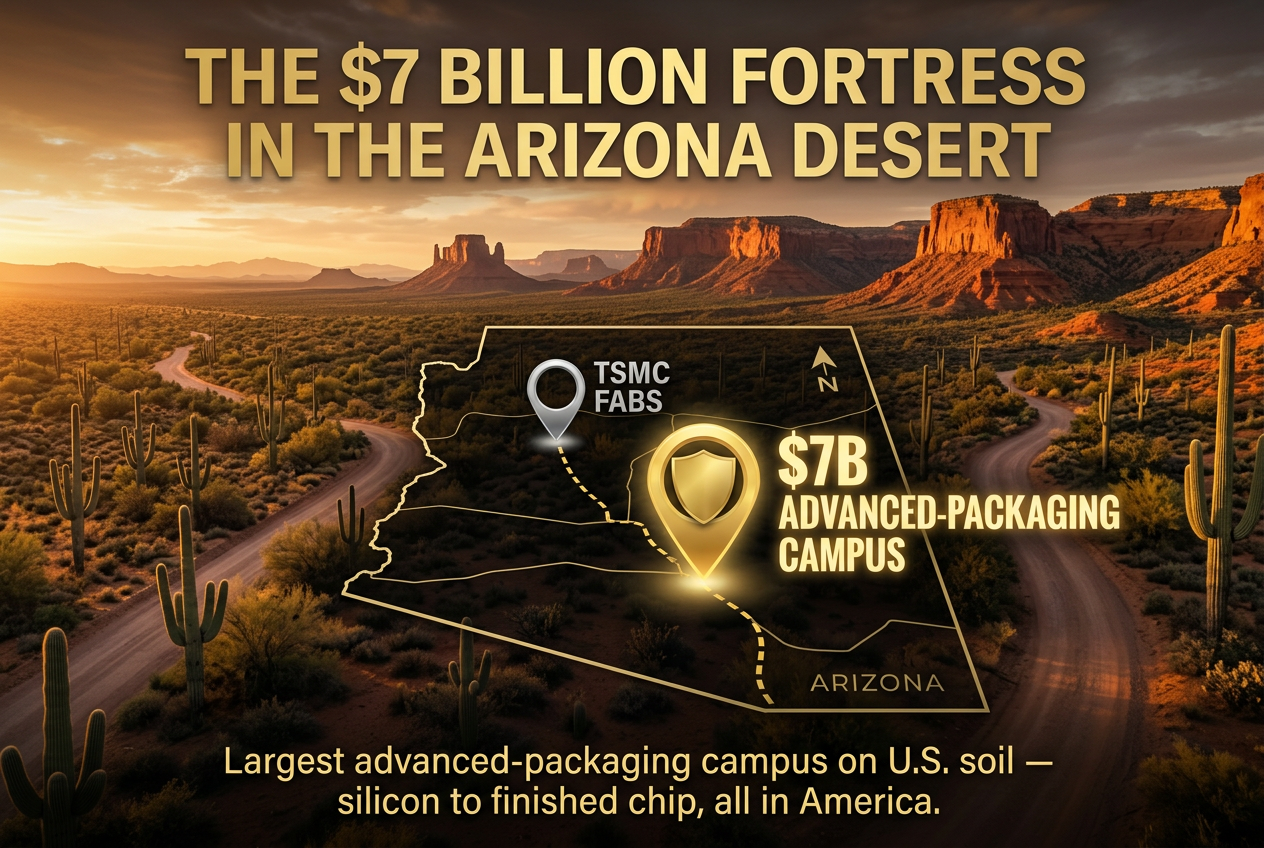
When it’s running, an AI chip will be able to go from raw silicon to finished brain without ever leaving the United States.
For the first time in a generation.
And the company building it is not Nvidia.
Not TSMC. Not any name you’d guess.
It’s a company most investors have never heard of — yet it is already the largest American-owned advanced packaging and test company in the world.
It’s been quietly perfecting this dark art for over five decades, while Wall Street chased shinier things.
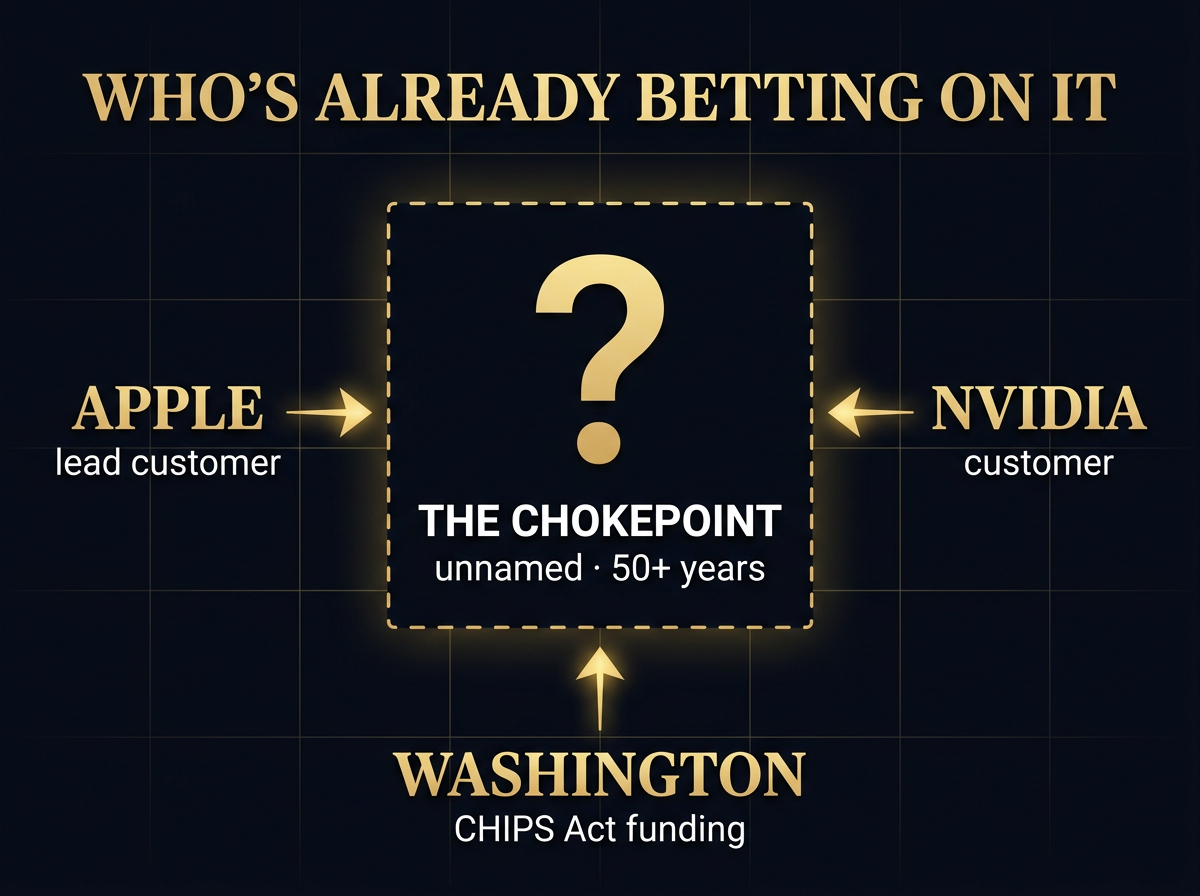
Consider who’s already placed their bets:
Apple — the most demanding customer on Earth — has publicly committed as the lead customer of that Arizona fortress.
It’s trusting this company with the final assembly of the silicon inside its most important products.
Nvidia — the king of AI itself — is a customer.
And Washington — the same Washington from everything I’ve told you today — is helping pay for it with CHIPS Act money.
Why?
Congress concluded that bringing this exact capability home “strengthens our national security.”
Their words.
The most valuable company in history. The most powerful chipmaker in history. The United States government.
All three, betting on one company at the same chokepoint.
Now connect it to everything you’ve learned today.
Anthropic’s revenue has gone from $1 billion to $47 billion in two years.
And every dollar of it runs on advanced silicon.
The IPO — coming as soon as October — will pour rocket fuel on a buildout that is already straining every link in the chain.
Wall Street will stampede into the obvious names at the top of the pyramid, the way it always does.
But the smart money — the kind I’ve spent thirty years learning to follow — will be looking one layer down.
At the bottleneck.
At the company that gets paid no matter whose chip wins.
No matter whose model is smartest.
No matter who wins the race between Anthropic and its rivals.
Because chokepoints don’t pick winners. They tax them. All of them.
Let me show you the size of the tax base this one company sits on.
Anthropic alone just committed $50 billion to brand-new American data centers — Texas and New York first, coming online this year.
Its rival OpenAI has stacked up over a trillion dollars in infrastructure commitments.
And the four giants — Google, Amazon, Microsoft, Meta — plan to pour roughly $725 billion into AI buildout in 2026 alone.
That’s up 77% in a single year.
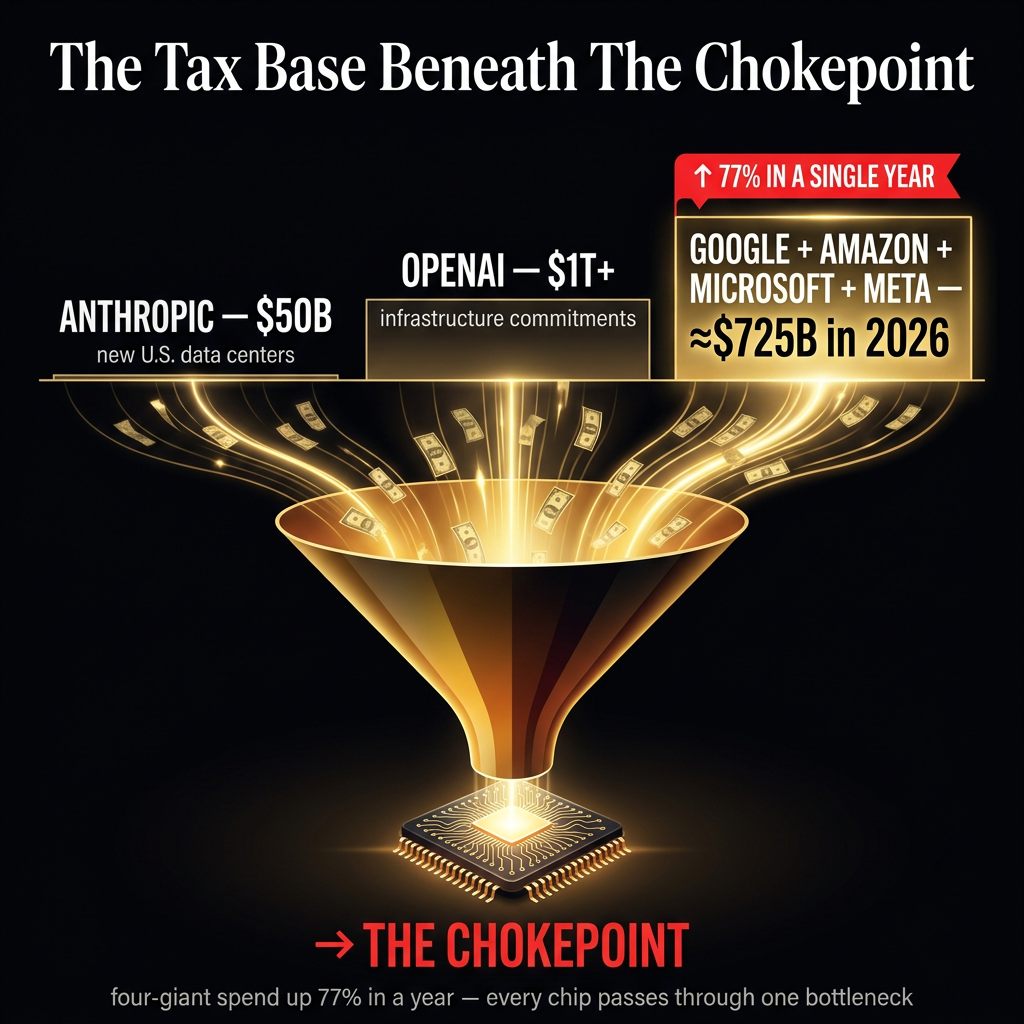
Every dollar of it — every data center, every server rack, every contract — funnels down to the same physical object.
An advanced AI chip.
And every one of those chips must pass through the chokepoint I’ve been describing before it can switch on.
Now hold that against the other side of the ledger.
By my math, the company I’ve found trades at less than 1% the size of either of its two most famous customers.
The demand side is measured in trillions.
The chokepoint is priced in the low billions.
And here’s the multiplier most investors miss.
As AI chips get more powerful, they don’t need less of this company’s work.
They need dramatically more.
Each new generation stacks more layers of high-speed memory.
It packs more silicon into one package.
It demands more of exactly the dark art this company has spent five decades perfecting.
Industry capacity for this work is all but sold out — booked solid into the future.
Rising content per chip. Multiplying chips per data center. Multiplying data centers per giant.
All squeezing through a company priced like nobody’s noticed.
That’s the mismatch.
We’ve seen what it does when the crowd finally catches on…
And here’s where I keep the promise I made you at the very start of this letter.
Three setups. Three fortunes. Names, dates, and numbers.
Take Vistra — a Texas utility, of all things.
The largest competitive power generator in America, about as unglamorous as a stock can get.
Then the AI giants came begging for electricity, and Amazon and Meta signed long-term deals for its power.
The stock ran from $11.30 at its 2020 low to as high as $219.82 — a gain of more than 1,800%.
Every $10,000 would have turned into roughly $194,000.
On a utility.
Or Celestica — a thirty-year-old Canadian electronics assembler, cast off from IBM’s old manufacturing arm, ignored by Wall Street for two straight decades.
Then the hyperscalers needed someone to actually build their AI servers and switches.
And the boring assembly company became one of the best-performing stocks in the world.
It ran from around $11 in 2022 to nearly $300 by early this year.
More than 2,500%. Every $10,000 into roughly $265,000.
And then there’s my favorite, because almost nobody on Earth has heard of it.
Credo Technology — a company of barely 600 employees that makes, of all things, cables.
The specialized cables AI servers scream data through.
In May of 2023, you could have bought it for $7.20 a share.
Just recently it hit an all-time high of $245.95.
That’s a gain of more than 3,300%.
Enough to turn every $10,000 into roughly $341,000.
A utility. An assembler. A cable maker.
Those are the three I promised you on page one. Paid in full.
Now, let me be straight with you: I didn’t catch all three of those, and neither did anyone else.
Nobody catches them all.
I’m showing them to you for one reason — the physics.
When the AI wave reaches an overlooked company the giants cannot live without, the repricing isn’t 30% or 50%.
It’s measured in multiples.
And notice the date on that last one: Credo’s all-time high was six days ago.
This wave is not a story from 2024.
It is happening right now, this month, to companies exactly like the one in my briefing.
Nobody saw those coming, either. Until everybody did.
The difference this time? You can see the date coming. They couldn’t.
I’ve laid out the entire case in a brand-new investor briefing.
The company’s name. Its ticker symbol. My full analysis.
The exact buy-up-to price I’d pay today.
And the three signposts that will tell you the repricing has begun.
It’s called:
“The American Chokepoint: The One Company Every AI Chip Must Pass Through.”
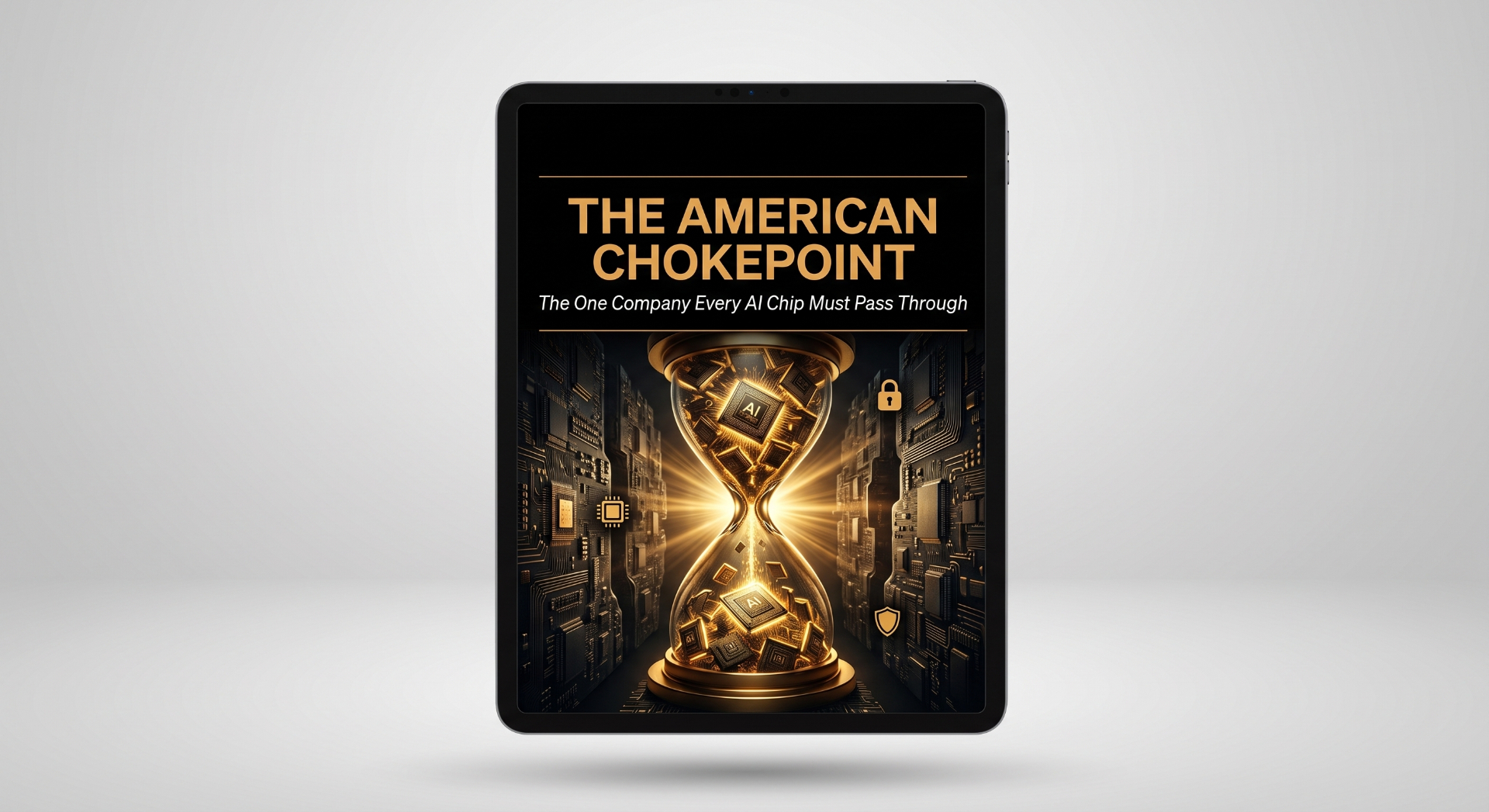
In a moment, I’ll show you how to claim it — free.
But there’s one more step first.
Because so far, I’ve only shown you how to play offense.
And remember what this technology did to IBM… to the legal databases… to $285 billion of “safe” software stocks in a matter of days.
You already know that offense is only half the battle.
Step 2 is about making sure the most dangerous company in America doesn’t blow a hole in the side of your retirement.
Because I’ve found five household-name stocks sitting directly in its blast path.
There’s a very real chance you own at least one of them right now.
Here’s the conversation nobody on Wall Street wants to have with you.
Every dollar of that $965 billion valuation… every dollar of the fortune this IPO is about to mint… is coming from somewhere.
It’s coming out of the old economy.
Out of the software companies whose products Claude can now build in an afternoon.
Out of the consultants whose billable hours just became a prompt.
Out of the “safe” blue chips that have quietly become the prey in this story.
You watched it happen already.
One blog post: IBM loses $31 billion in a day.
One product announcement: the company behind America’s biggest legal database suffers the worst day in its history.
One quiet release: $285 billion gone from the software sector in under a week.
Microsoft alone has surrendered $700 billion.
Now ask yourself the question I asked when I finished my research:
What happens to those companies when Anthropic goes public.
And suddenly has a trillion-dollar war chest and a public currency to hire, acquire, and accelerate?
The disruption you’ve seen so far happened while this company was still private.
Still rationed by its own compute.
Still holding its most powerful weapon — Mythos — back from the world.
October changes all of that.
I’ve found five widely held stocks that I believe are sitting directly in the blast path.
Their core business is precisely the kind of work this technology does faster, better, and nearly free.
These aren’t obscure names.
They’re the kind of stocks that show up in dividend funds, “safety” portfolios, and target-date retirement accounts.
Millions of Americans own them without a second thought.
If you hold even one of them, I believe you should know before October — not after.
I’ve put all five — names, tickers, and the specific reason each one is in danger — in a second briefing:
“The SaaSpocalypse Sell List: 5 Powder Kegs to Dump Before the IPO.”
Because one chokepoint isn’t the whole map.
When a trillion-dollar buildout hits, the money floods every link in the chain. The machines. The energy. The silicon.
So the third step is simple: own the rest of the toll booths.
Your third briefing hands you three more positions, straight from my model portfolio.
The Dutch giant that holds a true monopoly on the machines that make advanced AI chips possible. No company on Earth can build a frontier chip without it.
The American energy toll road — the pipeline colossus positioned to collect on the rivers of natural gas that Anthropic’s new Texas data centers, and everyone else’s, will devour.
And the silicon player hiding in plain sight — the chip stock I put in the portfolio years before the AI crowd arrived.
Two of the three have already doubled or tripled for my readers. And I believe their biggest chapters are still ahead.
Names, tickers, buy-up-to prices — all three, the moment you join.
That’s the full campaign. The chokepoint. The cleared blast radius. The whole supply chain.
That’s the full blueprint. Three steps:
The gift: Google — the door they forgot to lock. Already yours, free, no strings attached.
Step 1: Own the American Chokepoint — the small company every AI chip must pass through, with Apple, Nvidia, and Washington already behind it.
Step 2: Get clear of the five powder kegs before the explosion.
Step 3: Own the whole supply chain — three more backdoors, straight from my portfolio.
Now let me show you how to get everything in the next five minutes.
I’ve spent thirty-five years building one thing: a research service for people who don’t have a seat at those tables I told you about.
It’s called Breakthrough Wealth.
It exists for exactly one purpose: to find great companies the crowd hasn’t found yet — and hand you the story behind the numbers before Wall Street wakes up.
This is the same research that put my readers into Editas and Beam Therapeutics before gene editing was a household phrase.
The same discipline that flagged the 2008 collapse while the “experts” laughed.
And the same network that has me in rooms with Congressmen, presidential families, and the people who actually move this country.
When you accept a trial membership today, here’s everything that lands in your inbox right away:
Plus a full year of Breakthrough Wealth itself ($2,997 value):
• 12 monthly issues — every one with my latest research, a new recommendation or update, and the story behind the numbers.
• My complete model portfolio — every open position, every buy-up-to price, fully transparent. The same portfolio those Google shares now sit in.
• Real-time trade alerts — the moment it’s time to buy, sell, or take profits, you’ll know. Including every milestone between here and the IPO.
• My members-only briefings and updates — everything I learn, you learn.
That’s almost $4,500 in research before we even count the membership.
But don’t take my word for what this research is worth.
Take theirs:
Regular people. Regular brokerage accounts.
The same research letters you’ll be reading.
And the price for everything I’ve described is not the $5,000 some charge for a single report like this one.
It’s $1,997. For the entire year.
$5.47 a day.
Less than a latte a day.
Why so little?
Because thirty years has taught me the economics of trust: I don’t need to sell this research for its true value today.
I need to do my best to make you money — and when I do, I know you’ll stay with me for years.
That’s the whole business model.
You’re not the product here; you’re the proof.
And you risk nothing to see if I’m right.
Take the next 30 days. Read every briefing. Check the portfolio.
Keep the briefings. Keep the research. If you don't see the value of our research, we part as friends.
At this point, there’s usually one last question.
And it’s the right one to ask:
“Dylan… if this story is so big, am I already too late?”
Look at the sequence one more time…
The IPO hasn’t happened.
Wall Street is still pricing the stake like a footnote.
The analysts are still stripping the stake out of their models.
The chokepoint company is still priced at less than 1% of its customers.
Nothing — nothing — that I’ve described to you has been repriced yet.
Too late is when the financial press finally does the math — and discovers everything you now already know.
Too late is October.
Today is early.
Uncomfortably early — which is exactly how this is supposed to feel.
Every position I’ve ever made real money on felt exactly this way at the start.
American Express felt wrong at the bottom — before the 646% ride.
AMD felt lonely before the AI crowd showed up — before 226%.
Palantir felt like a long shot — before a run of as much as 2,700%.
Early always feels wrong. That’s the price of the gap.
So here’s the whole play, one last time:
Your gift — Google. The door they forgot to lock. Already yours, free — ticker, thesis, the works.
Step 1 — The American Chokepoint. The one company every AI chip on Earth must pass through. Name, ticker, and buy-up-to price the moment you join.
Step 2 — The SaaSpocalypse Sell List. Five powder kegs out of your retirement account before the blast. Also yours right away.
Step 3 — the supply-chain briefing: three more backdoors, two already doubled or tripled for my readers. Plus twelve monthly issues, the full portfolio, and my alerts at every milestone between here and the IPO.
Almost $4,500 in research. $1,997 for the year. 30 days to decide, every penny back if we disappoint.
Now let me paint the two ways this plays out, because one of them is going to happen to you either way.
Road one: you close this letter. Life goes on.
Then one regular morning — maybe October, maybe sooner — you open your phone and the financial world is on fire about one company.
The talking heads “discover” the hidden stake.
The chokepoint stock gaps up before the open.
The five powder kegs you never checked your 401(k) for are gapping the other way.
And you’ll remember this letter — the way I remember the people who laughed in 2008.
Road two: you spend less than a latte a day.
Tonight, you own the door.
The chokepoint report is on your screen.
The sell-list is checked against your retirement account.
And when that filing drops, you’re not reading the news.
You’re ahead of it.
Same morning. Same headlines.
Two completely different lives on the other side of them.
You’ve stood at this fork before. Everyone has.
If you missed Amazon in 1997… you remember the feeling.
If you watched Vistra run 1,800%… Celestica 2,500%… Credo 3,300% — and told yourself “next time”…
This is next time.
The same setup that turned every $10,000 into as much as $341,000 the last three times it appeared.
The same pattern that minted a 9,700% run the last time Washington banned a technology like this.
And this time, you’ve been handed the door key for free.
The only thing you can’t get back is the window.
Anthropic filed its confidential paperwork on June 1st.
The SEC review is underway right now.
Between this morning and the October IPO, every hidden number in this letter becomes public — the stake, the chokepoint demand, all of it.
The true size of Google’s hidden stake.
The true scale of the chokepoint demand.
The repricing I’ve described doesn’t wait for your decision.
It’s already in motion — and it completes by IPO day.
The only move that beats it is the one made before.
Every great fortune in market history was made in the gap between when the few knew and when everyone knew.
You are standing in that gap right now.
A year from now, this will all look obvious. It always does — after.
I know which side of that morning I’d choose.
Sincerely,
Dylan Jovine
Founder, Breakthrough Wealth
P.S. — Whatever you decide, the Google recommendation is yours to keep. Buy it in any brokerage account, free of charge from me, no membership required. That’s how confident I am in everything else I’ve shown you — I can afford to give the first move away.
P.P.S. — But please — even if you never send me a dime — check your retirement accounts against this story. Do you hold the big “safe” software and services names? Then you may be standing in the blast radius I described. The five most exposed are sitting in my Sell List briefing right now. Thirty days, full refund, keep the report. The check-up alone is worth the $1,997.
P.P.P.S. — One last time, because it’s the single most important fact in this letter: the repricing will not wait politely for IPO day. Court documents, the public S-1, the roadshow — the hidden math in this letter goes public in waves between now and October. By the time the bell rings, the gap is gone. The only morning you control is this one.